Bhitarkanika
The Legacy of Bhitarkanika
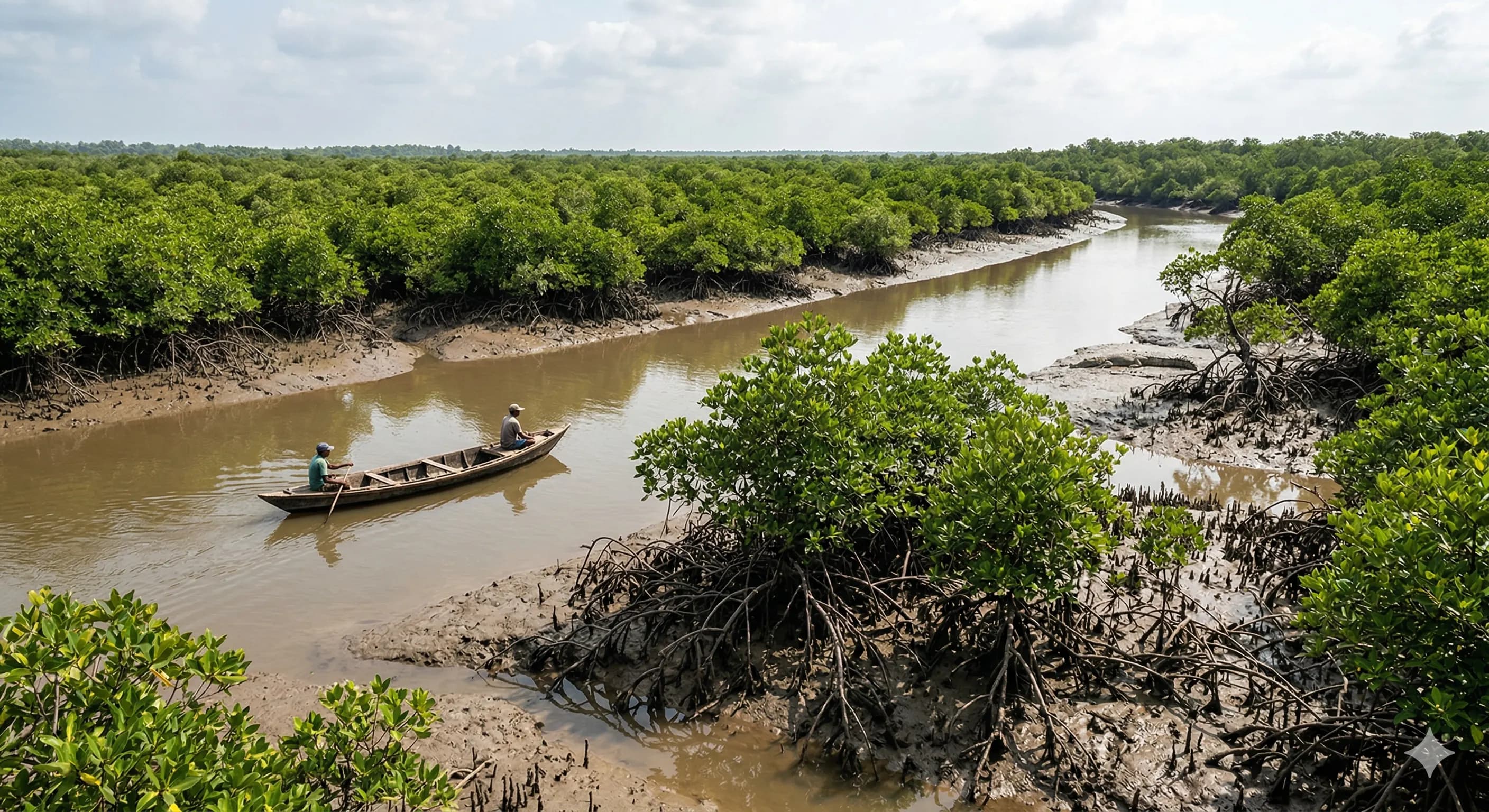
Bhitarkanika National Park, covering 672 sq km of dense mangrove forests at the delta of the Brahmani, Baitarani, and Dhamra rivers, is India's second-largest mangrove ecosystem and one of the most biodiverse wetlands in Asia. The park holds the Guinness World Record for housing the world's largest known saltwater crocodile population — over 1,700 individuals, some exceeding 6 metres in length. Designated a Ramsar Wetland of International Importance, its labyrinthine tidal creeks and mudflats support 215 bird species, king cobras, water monitors, and fishing cats. Just offshore lies Gahirmatha Beach, the world's largest mass nesting site for Olive Ridley sea turtles — every January through March, hundreds of thousands of turtles crawl ashore under moonlight to lay eggs in a spectacle that draws marine biologists and wildlife photographers from around the globe. The surrounding villages practice traditional fishing and crab harvesting, and a boat safari through the mangrove channels at dawn remains one of eastern India's most unforgettable wildlife experiences.
Best Time
October to March
Top Spots
4 Landmarks
Local Flavors
Places to Explore
Saltwater Crocodile Safari
A boat safari through narrow mangrove creeks where massive saltwater crocodiles bask on mudbanks — Bhitarkanika holds the world's densest population, with some individuals over 6 metres long.
Gahirmatha Beach
The world's largest Olive Ridley sea turtle mass nesting beach — between January and March, hundreds of thousands of turtles arrive to lay eggs in a synchronised spectacle visible from sanctioned viewpoints.
Dangmal — Heronry & Nature Trail
An eco-trail starting from the Dangmal base camp that passes through a vibrant heronry where thousands of herons, egrets, and cormorants nest in the canopy — an extraordinary birdwatching experience.
Habalikhati Island
A remote island formed by silt deposits, known for turtle conservation camps and pristine, untouched beaches where casuarina trees line the shore — accessible only by boat.
Essential Travel Tips
Entry permits are mandatory — arrange them through a registered tour operator or at the Rajnagar Forest Office at least a day in advance.
Book early morning boat safaris (6–7 AM departure) for the best crocodile basking sightings and birdlife activity along the tidal creeks.
Carry insect repellent — the mangrove environment means mosquitoes are abundant, especially during dusk hours.
Visit between January and March to witness the Olive Ridley turtle mass nesting at Gahirmatha — a once-in-a-lifetime wildlife spectacle.
Wear earth-toned clothing and speak softly during safaris — wildlife is more visible when you blend into the environment.