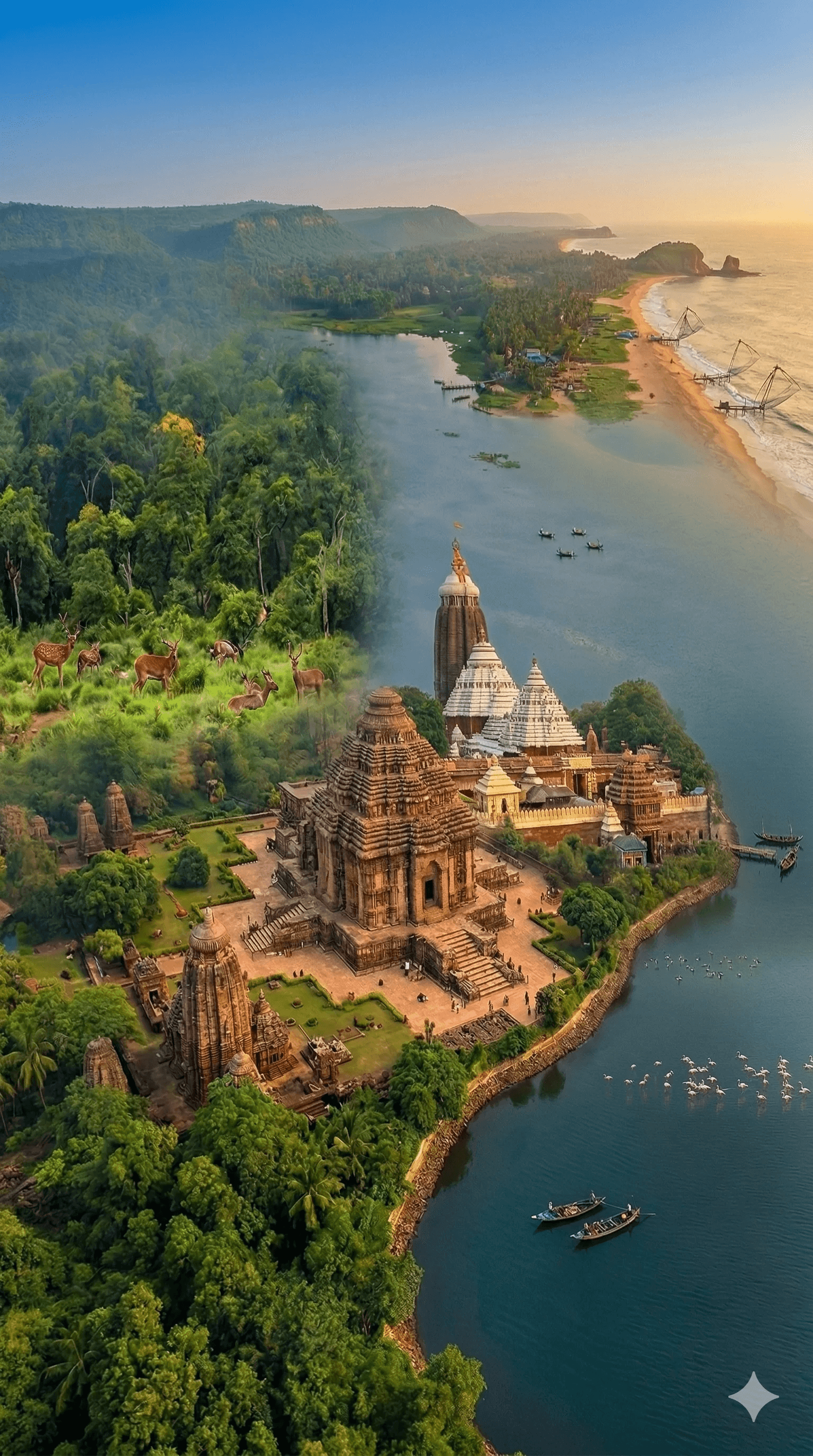
Known as the "Temple City of India", Bhubaneswar traces its sacred heritage back over 2,000 years. At its peak, the city sheltered more than 7,000 temples — today, around 700 still stand, each telling a different chapter of Odisha's spiritual story. Whether you're a devout pilgrim or a curious traveller, Bhubaneswar's temples are an unmissable journey through stone, faith, and time.
Planning a trip? Our Bhubaneswar travel guide covers everything from getting here to the best time to visit. For curated temple-trail packages, browse our Odisha tour packages.
1. Lingaraj Temple — The Spiritual Crown of Bhubaneswar
Dating to the 11th century, the Lingaraj Temple is the largest and most revered temple in Bhubaneswar. Dedicated to Harihara (a fusion of Shiva and Vishnu), its 55-metre tower (deula) dominates the city's skyline. The intricate carvings on its exterior depict celestial nymphs, warriors, and mythological scenes with extraordinary detail.
- Timings: 6:00 AM – 9:00 PM (darshan hours)
- Entry: Free for Hindus; non-Hindus may view from the external viewing platform
- Tip: Visit at dawn for the morning aarti — the chanting and oil lamps create an incredibly atmospheric experience
2. Mukteswar Temple — The "Gem of Odisha Architecture"
Built in the 10th century, Mukteswar Temple is a compact but breathtakingly detailed masterpiece. Art historians consider it the most refined example of Kalinga architecture in India. Its ornate torana (arched gateway) is particularly celebrated — the carvings depict scenes from the Panchatantra fables, making it as much a storybook as a sacred site.
- Timings: Sunrise to sunset
- Photography: Permitted in the outer premises
- Nearby: Kedareswar and Siddheswar temples are within walking distance
3. Rajarani Temple — A Temple Without a Deity
Unusually, the Rajarani Temple (11th century) has no presiding deity — but what it lacks in active worship, it compensates with spectacular sculpture. The red and gold sandstone (locally called "rajarani" stone) gives the temple its name and its warm glow at sunset. The exterior is covered in sensuous figures, female attendants, and guardian deities from all eight directions.
- Timings: 8:00 AM – 6:00 PM daily
- Entry fee: ₹25 (Indian nationals), ₹300 (foreign nationals) — ASI monument
- Best for: Photography, architecture enthusiasts
4. Brahmeswara Temple — A Living Architectural Chronicle
The Brahmeswara Temple (9th–10th century) is notable for its five-tower cluster design and its remarkably preserved inscriptions, which provide historians with rare insights into medieval Odisha's social fabric. The carvings on the outer walls include detailed depictions of daily life, musicians, dancers, and erotic motifs typical of the nagara tradition.
5. Ananta Vasudeva Temple — Bhubaneswar's Only Vaishnava Temple
The only major temple in Bhubaneswar dedicated to Lord Vishnu rather than Shiva, Ananta Vasudeva (13th century) connects directly to the Jagannath tradition of Puri. The temple's kitchen is famous for its prasad — the meals are served using the same rituals as at the Jagannath Temple.
- Best time to visit: During the Rath Yatra festival (June–July)
6. Parasurameswar Temple — Bhubaneswar's Oldest Intact Temple
Built around 650 CE, this is one of the earliest surviving examples of Odisha temple architecture. While smaller than later temples, it features beautifully carved panels showing Shiva legends and the iconic Lakulisha (a form of Shiva as a teacher). Its antiquity and preservation make it an essential stop for history lovers.
7. Vaital Deul — The Tantric Temple with a Dark Beauty
The Vaital Deul (8th century) has a distinctly different energy from Bhubaneswar's other temples. Dedicated to Chamunda (a fierce form of the goddess), it follows the khakhara architectural style (barrel-vaulted rather than tower-style). The interior carvings include striking figures of Mahishasuramardini and eight-armed Chamunda — dramatic and powerful.
8. ISKCON Bhubaneswar — Modern Grandeur
For those seeking a more accessible spiritual experience, the ISKCON temple in Nayapalli is a beautifully maintained modern temple complex with daily kirtans, prasad distribution, and a visitor-friendly atmosphere. The main shrine houses beautiful deities of Radha-Madanmohan.
9. Bindu Sagar — The Sacred Lake at the Heart of Temple City
Not a temple itself, but Bindu Sagar lake is the sacred water body around which Bhubaneswar's temple clusters grew. According to legend, every sacred river in India contributes a drop of water here. Over 50 temples ring its banks, and a sunrise or sunset walk around the ghats rewards you with an unparalleled glimpse of the living temple city.
10. Sisireswara Temple — Hidden Gem Near Bindu Sagar
Often overlooked by tourists, the Sisireswara Temple (7th–8th century) near Bindu Sagar is a compact gem with extraordinarily fine floral and geometric carvings. Local priests here are typically very welcoming of genuine pilgrims and happy to explain the temple's significance.
Practical Tips for Temple Visits in Bhubaneswar
- Dress code: Cover shoulders and knees at all major temples; carry a scarf
- Footwear: Remove shoes before entering — most temples have safe deposit areas
- Photography: Always ask permission before photographing inside a shrine room
- Best time to visit: October to March for cool, comfortable weather
- Getting around: Hire a car for the day to cover all sites comfortably — our car rental service operates 24/7 in Bhubaneswar
Ready to walk the temple trails of Bhubaneswar? Our expert guides know every stone and story. View our Odisha pilgrimage packages or reach us directly to plan a custom temple circuit.